How a Hand-Woven Rug Is Made
Woven, not knotted or punched. Here's what hand-weaving a rug actually involves, and what it gives you underfoot.
What "Hand-Woven" Actually Means
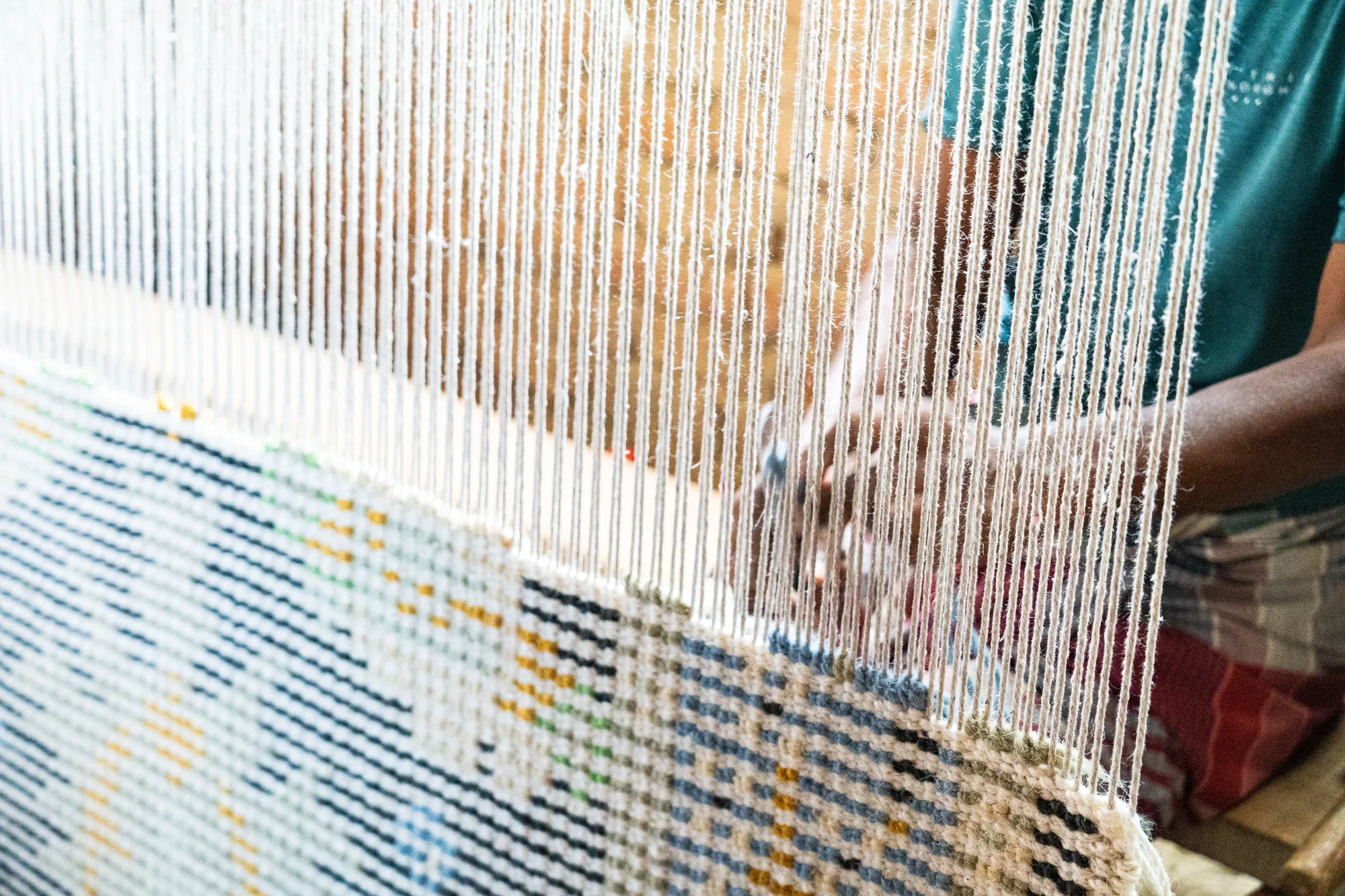
A hand-woven rug is built on a loom by interlacing two sets of threads: no knots tied around a foundation, no yarn punched through a backing. That single difference in method is what sets it apart from the two other handmade techniques. A hand-knotted rug is made from thousands of individually tied knots; a hand-tufted rug is made by punching yarn through a canvas with a tool. A hand-woven rug is neither. It's woven, closer to how a basket or a length of cloth is made.
The result is usually a flatweave: a rug with little or no pile, thinner and lighter than a knotted or tufted piece, and, because there's no backing and no pile direction, often reversible, with the pattern reading much the same on both sides.
The Loom, the Warp, and the Weft
Every woven rug starts with the loom and two sets of threads.
- The warp is the set of threads stretched tight and vertical on the loom. These are the rug's backbone; they run its full length and hold everything under tension.
- The weft is the thread woven horizontally through the warp, passing over one warp thread and under the next, then back again, row after row.
As the weaver builds up row upon row of weft, the rug takes shape from the bottom up. Pattern comes from changing the color of the weft thread and from the sequence of over-and-under, not from a design drawn on a backing. It's slower and more deliberate than it looks, and every choice is made by hand as the weaving progresses.
Why the Weave Feels the Way It Does
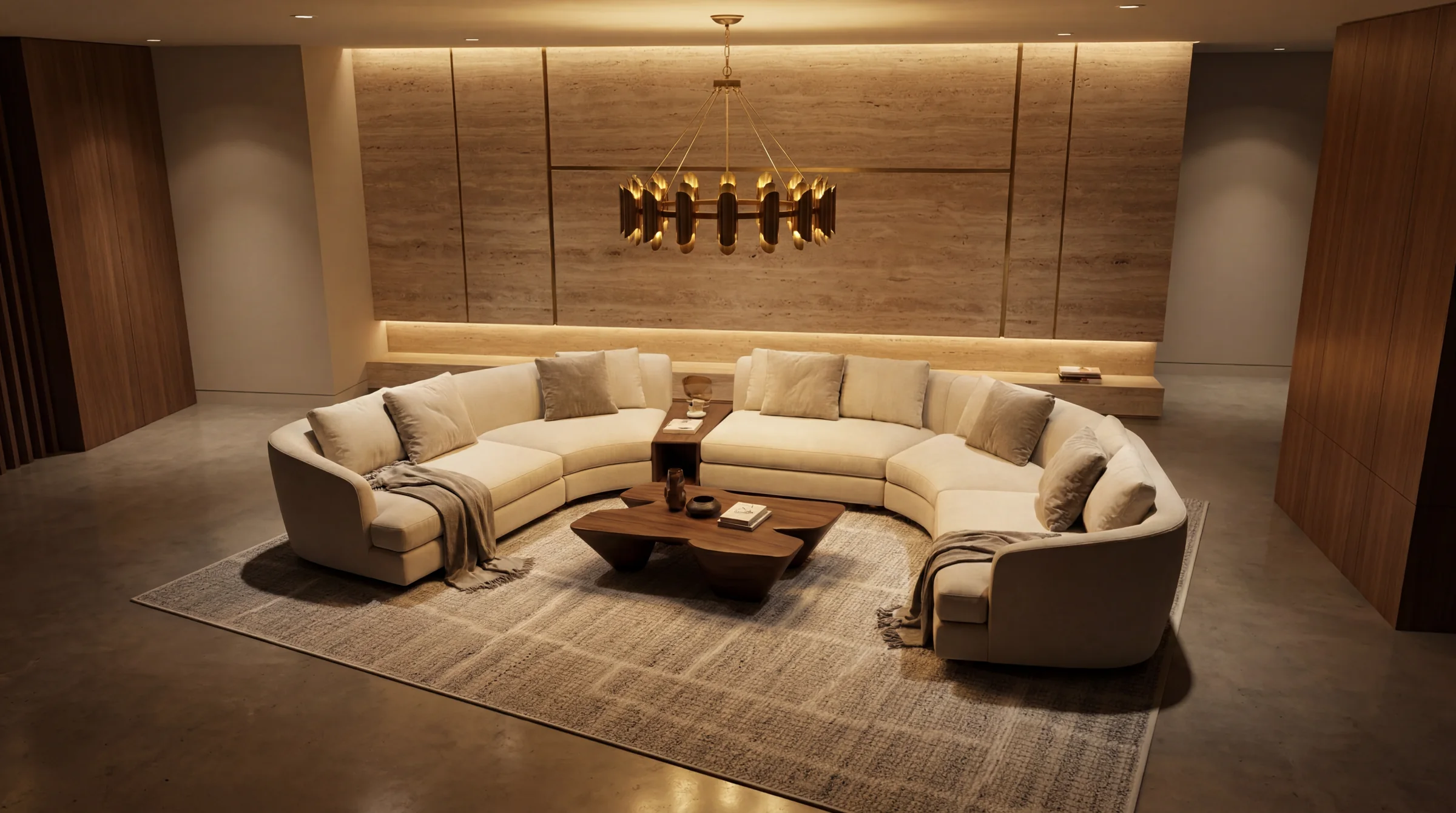
Because there's no pile to trap it, a hand-woven flatweave sits low and close to the floor. That gives it a few distinct qualities: it's easy to move and lift, it doesn't hold dust deep in a pile the way a thick rug does, and it lies flat under furniture without adding bulk. The trade-off is underfoot softness: a flatweave is firmer than a plush knotted or tufted rug, which is exactly why it suits some rooms better than others.
It's also honest construction. Flip a hand-woven rug over and you see the same weave, the same pattern, and there's nothing glued or hidden underneath, because the weave is the whole rug.
Where a Hand-Woven Rug Works Best
Low profile and no backing make hand-woven rugs a natural fit for layered looks, for spaces where a door needs to clear the floor, and for rooms where you want texture without height. Their flat, breathable construction also makes them well-suited to homes with underfloor heating, since there's no dense pile or synthetic backing to block the heat rising through.
They reward the same gentle care as any handmade rug: suction-only vacuuming, prompt blotting of spills, and a rug pad underneath to keep a lightweight weave from shifting.
Every Quarry rug is hand-woven this way, built row by row on the loom for the low, textural, honest character that only weaving gives. Explore the Quarry Collection.
Explore the Quarry Collection
Hand-woven wool rugs in quiet stone tones, made row by row for low-profile texture and a clean, honest construction.
View the collection